5 ED Drug Side Effects You Should Know About (and How to Manage Them)

Sildenafil and tadalafil are two of the most common prescription treatments for erectile dysfunction (ED). And like most medications, they can come with some side effects. Most ED drug side effects are mild, short-lived, and easy to manage once you know what to expect.

Featured
Read Time 5 min read
Posted on Aug 11, 2026

Why ED Medications Cause Side Effects

Sildenafil and tadalafil are prescription medications known as phosphodiesterase type 5 (PDE5) inhibitors. They limit the activity of the PDE5 enzyme. By doing so, they help blood vessels remain more relaxed, which allows greater blood flow to the penis and supports the body's natural erectile response during sexual arousal.

However, these medications affect blood vessels throughout the body, not just a single targeted area. So, many side effects are simply symptoms that same vascular response. They tend to appear predictably and resolve as the medication clears your system.

5 Common ED Medication Side Effects

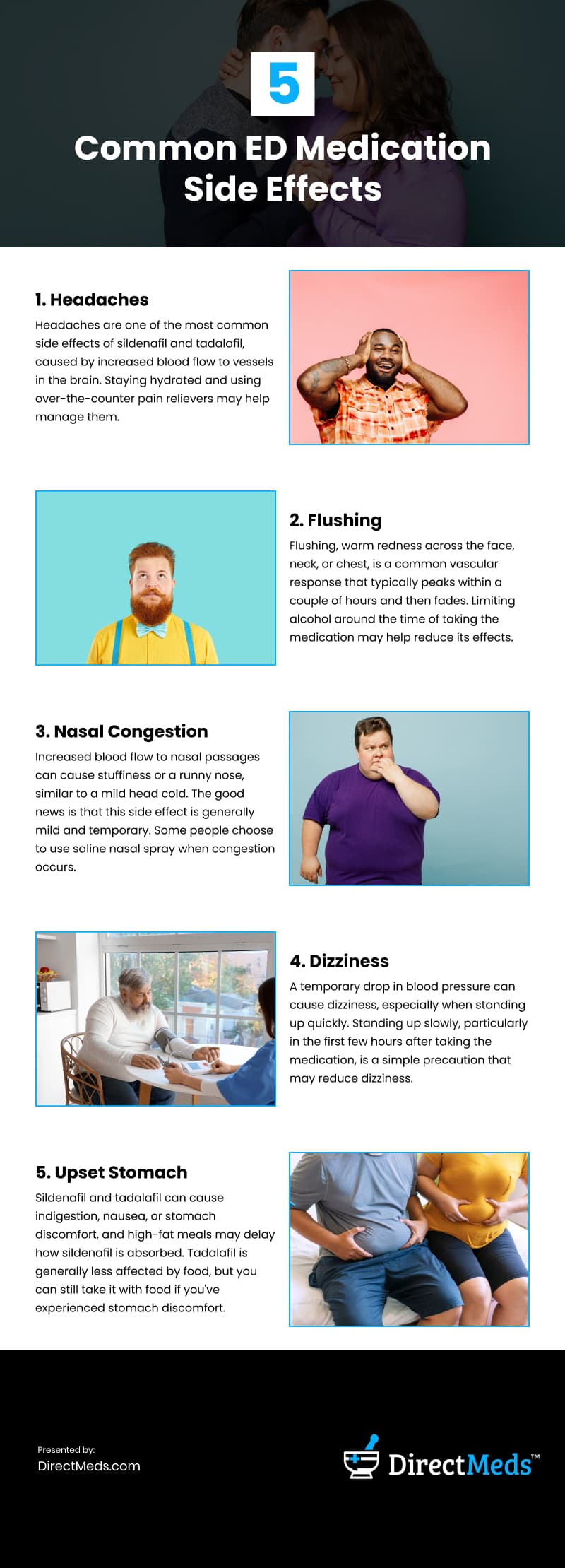
1. Headaches

Headaches are among the most frequently reported side effects with both sildenafil and tadalafil medication.1 2 They occur because the same mechanism that dilates blood vessels in the penis also affects blood vessels in your brain. The resulting increase in blood flow can create pressure sensations ranging from mild tension to a more noticeable headache.

Some people find that staying hydrated before and after taking the medication may make headaches easier to manage. Over-the-counter pain relievers may help when used appropriately. Some find that headaches become less frequent or less intense after the first few doses, while others continue to experience them during treatment. If you experience persistent or severe headaches, talk to your provider, as a dose adjustment may help.

2. Flushing

Flushing, a warm redness that appears across the face, neck, or chest, is another common vascular response. It typically peaks within a couple of hours of taking the medication, then diminishes.

Alcohol can worsen flushing because it is also a vasodilator (i.e., a substance that widens blood vessels). Because alcohol can contribute to flushing in some individuals, your provider may recommend limiting alcohol around the time you take sildenafil or tadalafil.

If you experience flushing that's noticeable but not severe, it's generally not a reason to stop treatment. If you have concerns, reach out to your provider.

3. Nasal Congestion

When you take ED medications, you may experience nasal congestion because the blood vessels in your nasal passages also respond to PDE5 inhibition the same way vessels everywhere else in your body do. The increase in blood flow can leave you feeling stuffy or with a runny nose, not unlike a mild head cold.

The good news is that this side effect is generally mild and temporary. Some people choose to use saline nasal spray when congestion occurs. If symptoms become bothersome, discuss options with your provider.

4. Dizziness

Dizziness is another common side effect of sildenafil and tadalafil often caused by a temporary drop in blood pressure, a natural consequence of the medication's vasodilating effects. It is more common when standing up quickly from a seated or lying position, a response sometimes called orthostatic hypotension.

Standing up slowly, particularly in the first few hours after taking the medication, is a simple precaution that may reduce dizziness. Avoiding alcohol, which also lowers blood pressure, is another useful step. If you have pre-existing low blood pressure or are taking other medications that affect your blood pressure, you should discuss potential interactions with your provider before starting treatment.

5. Upset Stomach

If you take sildenafil or tadalafil, you could also experience indigestion, nausea, or general stomach discomfort. Although these medications are best known for their effects on blood flow, they can also affect parts of the digestive system.

For sildenafil in particular, taking the medication with a high-fat meal can delay absorption and affect how the medication performs. Some providers recommend avoiding heavy, high-fat meals around the time you take sildenafil because food can influence how quickly the medication is absorbed. Tadalafil is generally less affected by food, but you can still take it with food if you've experienced stomach discomfort.

Side Effects That Warrant Medical Attention

Most ED drug side effects are mild and resolve without intervention. A small number are serious and require prompt medical care. Stop taking the medication and contact a medical provider if you experience any of the following:

  • Vision Changes: Sudden blurred vision, changes in color perception, or loss of vision in one or both eyes are rare but possible with PDE5 inhibitors. Do not restart the medication without speaking with a provider first.

  • Priapism: An erection that lasts more than four hours is considered a medical emergency. If left untreated, priapism can cause permanent tissue damage. Seek emergency medical care if you experience an erection that does not resolve within four hours.

  • Sudden Hearing Loss or Ringing in the Ears: Both have been reported in rare cases with PDE5 inhibitors and require immediate medical attention.3 Contact a provider as soon as possible if you experience either symptom.

Common Strategies Patients Discuss With Their Providers

Most side effects associated with sildenafil and tadalafil are mild and manageable when you know what to do.

Stay Hydrated

Hydration is often suggested as a simple step. Drink water before and after taking the medication, particularly if headaches or dizziness have been an issue.

Watch Your Alcohol Intake

Alcohol amplifies several of the most common side effects, including flushing, dizziness, and blood pressure fluctuation. If you notice flushing or dizziness, consider discussing alcohol use with your provider, as alcohol may contribute.

Mind Your Meal Timing

Food timing matters most with sildenafil. Food can affect how quickly sildenafil is absorbed. Some people prefer taking it on a relatively empty stomach or after a lighter meal. Tadalafil is less sensitive to food timing, but you can still take it with a light meal.

Talk to Your Provider About Dosing

Dose adjustments are also worth discussing with your provider. Both sildenafil and tadalafil are available in multiple doses, and your provider can help determine whether a different dose may be appropriate based on your experience with the medication.

Managing Your ED Treatment Confidently

Side effects are a normal part of most medication experiences, and ED treatments are no exception. Many side effects associated with sildenafil and tadalafil are temporary, though individual experiences vary.

Staying in contact with your provider throughout treatment is the most direct path to a medication experience that works well for you. Adjustments to dosing, timing, and lifestyle factors around the medication are all options your provider can help you navigate based on your specific response.

These statements have not been evaluated by the Food and Drug Administration. This product is not intended to diagnose, treat, cure, or prevent any disease.

Sources:

1https://www.accessdata.fda.gov/drugsatfda_docs/label/2014/20895s039s042lbl.pdf

2https://www.accessdata.fda.gov/drugsatfda_docs/label/2011/021368s20s21lbl.pdf

3https://pmc.ncbi.nlm.nih.gov/articles/PMC9442443/

Infographic

5 Common ED Medication Side Effects Infographic

You may also like these

NAD+ Therapy Online Provider
Featured 5 min read

5 Qualifications to Look for in an NAD+ Therapy Online Provider

Nicotinamide adenine dinucleotide (NAD+) has gained traction in the wellness space. But the supplement itself is only part of the picture. The provider overseeing your care has a significant impact on whether your experience is safe and personalized. Access to NAD+ therapy online has expanded in recent years, making it more widely available through telehealth platforms. As with many online healthcare services, approaches can vary in terms of protocols and provider experience. Understanding how a provider evaluates patients and delivers care can help you make more informed decisions regarding which provider to trust with your wellness needs.


Posted on Jun 25, 2026
Read More
Help with brain fog
Featured 6 min read

Can NAD+ Help With Brain Fog? What You Should Know

For many, living with brain fog leaves them seeking a clearer headspace, sharper focus, and a way to cut through the mental haze that makes everyday tasks feel difficult. Words slip away mid-sentence. Concentration feels like pushing through wet concrete. Many people describe it as a general sense of reduced mental clarity that can be difficult to explain. Nicotinamide adenine dinucleotide (NAD+) has gained growing attention for its potential role in supporting cellular energy production and cognitive function. This article explores what brain fog is, how NAD+ is involved in brain function at the cellular level, and what to know before you start searching for NAD for brain fog.


Posted on Jun 24, 2026
Read More
Why Energy Levels Fluctuate and How NAD+ May Help Stabilize Them
Featured 6 min read

Why Energy Levels Fluctuate and How NAD+ May Help Stabilize Them

You sleep a full seven hours, eat a reasonable breakfast, and make it to lunch feeling reasonably functional. Then, sometime in the late afternoon, you feel a shift in energy. Suddenly, you feel completely drained and ready to get home and sleep. This kind of energy variability is rarely the result of a single cause. A layered set of biological and lifestyle factors can shape how much energy you have at any given moment, and understanding those factors is the first step toward addressing them. One piece of that picture for some individuals is nicotinamide adenine dinucleotide (NAD+). If you’re exploring NAD injections for energy, understanding what this coenzyme actually does inside your cells is the clearest place to start.


Posted on Jun 23, 2026
Read More