


Table of Content
What Tirzepatide Weight Loss Injections Are and How They Work
Oct 7, 2025

If losing weight has felt like wrestling an octopus, you’re not alone. Many people find it difficult to lose weight and keep it off, especially when their metabolism or hunger signals seem to be plotting a mutiny. That’s where newer medications like tirzepatide come in, bringing science and strategy to help turn the tide.
Tirzepatide is a prescription injectable medication originally developed to treat type 2 diabetes. However, it has quickly gained attention in the weight loss community because of its “two-for-one” mechanism targeting GLP-1 and GIP receptors. These hormones help regulate appetite, satiety, and blood sugar, the three musketeers of weight management that play significant roles in your ability to lose weight effectively.
So, let’s break down exactly how it works so you get a clear picture of what to expect when you get tirzepatide delivered.
How Tirzepatide Works in Your Body
When you take tirzepatide as a weekly injection, it steps into the shoes of two natural gut hormones: glucagon-like peptide-1 (GLP-1) and glucose-dependent insulinotropic polypeptide (GIP). These hormones are released after you eat and send a friendly memo to your brain that you’re full. They also slow down digestion and help control blood sugar levels.
Tirzepatide activates these natural pathways, increasing the volume of your body’s natural signals, making them stronger and longer-lasting. What does that mean for you? You feel full longer, cravings lose some of their persuasive charm, and saying no to snacks doesn’t feel like a willpower war. Additionally, your body becomes more efficient at using insulin, which helps reduce fat storage and regulate blood sugar, which are essential in long-term weight control.
Benefits You Might Notice with Tirzepatide Injections
If your doctor has prescribed tirzepatide or you’re considering asking about it, it’s helpful to understand the specific benefits people commonly experience. Most patients report a slow-and-steady weight loss, especially when they combine tirzepatide with healthy eating habits and light physical activity.
What’s unique about tirzepatide is its dual hormone action. Most weight loss medications focus only on GLP-1, but by also targeting GIP receptors, tirzepatide offers a one-two punch of enhanced appetite suppression and improved insulin sensitivity, which are both key drivers of long-term success.
You may also notice that your energy levels perk up as blood sugar becomes more stable and your body adjusts to burning fat for fuel instead of storing it. With reduced appetite and fewer energy crashes, it becomes easier to stick to your goals without feeling like you’re white-knuckling through every meal.
What to Expect from Weekly Injections
Tirzepatide is administered weekly through a subcutaneous injection, typically in your stomach, thigh, or upper arm. You’ll usually start on a low dose to help your body adjust and minimize side effects. Over time, your healthcare provider may gradually increase your dosage based on your progress and tolerance.
The injection process is simple, and many people manage it at home with guidance from a nurse or provider during the first few uses. Once you feel confident, it becomes as routine as your Sunday grocery run, just a quick part of your weekly health plan.
Consistency is critical. Pick a day, set a reminder, and treat it like an important appointment with yourself. Taking the injection at the same time each week helps maintain steady hormone levels, leading to better appetite control and more predictable results.
Potential Side Effects to Be Aware Of
Like any medication, tirzepatide sublingual drops and injections can cause side effects, though many are mild and temporary. The most common include decreased appetite, nausea, and diarrhea or constipation. These side effects are more common when first starting treatment. Think of these symptoms as your body saying, “Whoa, something’s new here,” before it settles down. These symptoms often fade after the first few weeks as your body adjusts.
To reduce side effects, eat smaller, low-fat meals and stay hydrated. Your stomach will thank you if you first keep things light and straightforward. If you ever experience severe abdominal pain or signs of dehydration, reach out to your provider right away. In rare cases, people may experience more serious conditions like pancreatitis or gallbladder issues, which is why ongoing medical supervision is essential.
Is Tirzepatide Right for You?
Tirzepatide is not for everyone, but it may be an ideal option if you’re struggling with obesity, are overweight with comorbidities like high blood pressure or prediabetes, or have type 2 diabetes. It’s often a game-changer for people whose appetite and blood sugar seem to ignore all the usual rules.
You’ll need to go through a proper evaluation with a healthcare provider who understands how GLP-1 and GIP agonists work. They’ll assess your medical history, lifestyle, and goals before recommending a personalized plan that could include tirzepatide or another medication in the same class.
How It Compares to Other GLP-1 Medications
You’ve probably heard of Ozempic, Wegovy, or Mounjaro, and it’s natural to wonder how tirzepatide fits into the picture. While all these medications are GLP-1 receptor agonists used for weight loss, tirzepatide (branded as Mounjaro) pulls double duty by also acting on the GIP receptor.
This dual action has demonstrated the ability to lead to more significant weight loss in clinical trials, with some people losing up to 20% of their body weight over time.1 While results can vary, these findings make tirzepatide a highly promising option for people seeking a non-surgical weight loss intervention.
Discuss with your doctor whether a dual-agonist like tirzepatide could be more effective than a single-pathway medication, depending on how your body responds and what challenges you face with hunger and metabolism.
Long-Term Considerations and Lifestyle Integration
Tirzepatide is not a magic bullet; you’ll still need to make supportive lifestyle changes for lasting results. But it can create a golden window of opportunity where your hunger is under better control and you’re more motivated to move, eat well, and make consistent progress.
As your weight drops and your body composition improves, you may also notice benefits like better sleep, lower blood pressure, and improved mood. These little “bonus wins” can feel like your body’s way of giving you a high five, helping you stay motivated over time.
To track your progress, your provider may recommend combining tirzepatide with behavioral coaching, nutritional counseling, or digital health tools. The more you personalize your plan, the more likely you are to see sustainable change.
Is It Time to Consider Tirzepatide?
If you’re frustrated by slow progress or repeated setbacks in your weight loss efforts, tirzepatide might be the well-timed nudge that changes your trajectory. It offers a scientifically sound path toward meaningful transformation by helping you manage hunger, control blood sugar, and improve your body’s hormonal response.
Talk to a provider who specializes in weight loss or metabolic health. Come armed with questions, explore your options, and see if tirzepatide might fit into your game plan. Combined with supportive habits and consistent follow-through, it can help you finally move forward at your own pace and on your own terms.
Video

Infographic
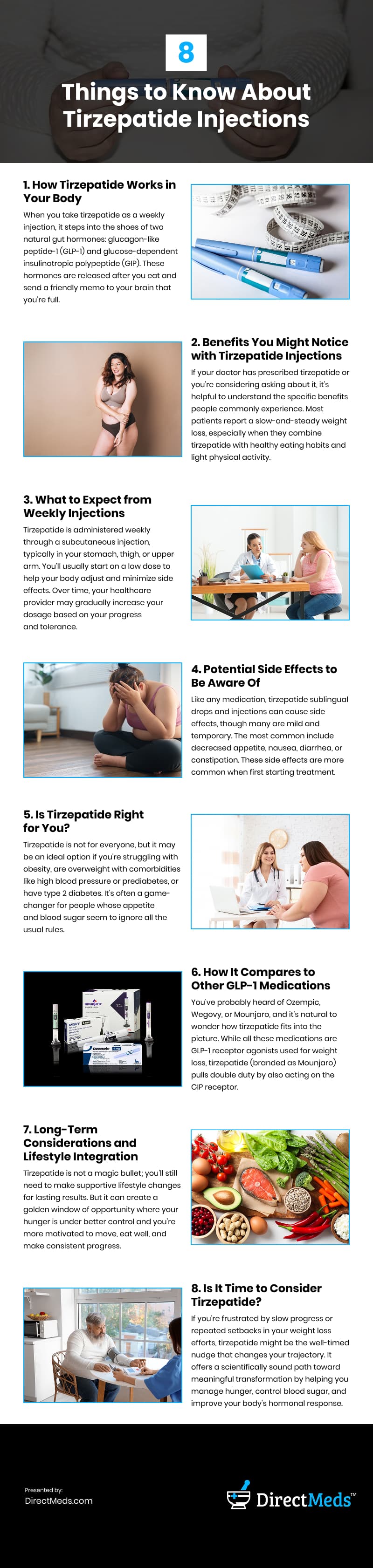
Losing weight can be challenging, especially when your metabolism and hunger signals sabotage your efforts. New medications like tirzepatide aim to help shift this balance. Check out this infographic for eight key facts about tirzepatide injections.
1https://www.nejm.org/doi/full/10.1056/NEJMoa2416394
Related Articles

March 17, 2026
What Your Body Goes Through When You Stop Semaglutide for Weight Loss
Semaglutide is a GLP-1 receptor agonist that is used in medical settings to support appetite regulation and blood sugar control in certain individuals, under healthcare provider supervision. As a GLP-1 receptor agonist, it may turn down the volume on hunger and help steady blood sugar. For many people, it feels like finally having a calm […]
Read More

March 12, 2026
The Role of Tirzepatide and Semaglutide in Managing Weight Gain During Menopause
One day, your jeans fit just fine. The next, they’re negotiating with you like a hostage situation. Welcome to menopause, where your body quietly rewrites the rules without asking for permission. Weight gain during menopause can feel like a sudden, frustrating shift in your body that’s out of your control. As hormone levels drop and […]
Read More

March 3, 2026
How Weight Loss Reduces Your Risk for These 6 Health Conditions
Losing weight is like turning down the volume on the strain your body’s been quietly carrying. Behind the scenes, your heart works a little less overtime, your metabolism finds its rhythm, and your joints stop protesting quite so loudly. As excess weight comes off, these systems can run more smoothly, lowering the risk of chronic […]
Read More
Ready to Start?
Start your journey towards a healthier you!