


Table of Content
Understanding How GLP-1 Medications Calm “Food Noise”
Feb 26, 2026

You know that moment when you’ve just finished lunch and your stomach is satisfied, but your brain is already rummaging through the pantry like it forgot something important? You’re not physically hungry, but the idea of a snack keeps tapping you on the shoulder like a bored toddler saying, “Hey. Hey. Hey.”
That constant, nagging urge to eat even when your body doesn’t need food has a name. While not a formal medical diagnosis, many people use the term “food noise” to describe persistent food-related thoughts. It’s more than occasional cravings. It’s persistent mental chatter about food that makes it hard to focus, plan healthy meals, or stick to any long-term weight loss strategy. For many people, it’s exhausting and overwhelming.
So if this all sounds familiar, let’s talk about what food noise really is and whether getting a weight loss prescription online can help regulate appetite may lead to fewer intrusive thoughts about food.1
What Is Food Noise?
Food noise is a common term for intrusive thought cycles around eating. It can include everything from obsessive thoughts about your next meal to sudden cravings that feel impossible to ignore. You might plan your day around what you’ll eat next or find yourself peeking in the fridge like it holds the secrets of the universe, even when your stomach says, “I’m good.” These thoughts can creep in while you’re working, watching TV, or even just relaxing.
This is all because your brain is wired to chase rewards and comfort. Food noise stems from deeply ingrained neurological patterns tied to reward systems, insulin response, emotional triggers, and hormonal fluctuations. If you’ve struggled with emotional eating or have found yourself stuck in yo-yo dieting, chances are, you’ve experienced this cycle firsthand.
That mental chatter makes mindful eating feel like trying to meditate in the middle of a rock concert. It can lead to overeating, binge behavior, and guilt. Over time, it also trains your brain to associate food with temporary emotional relief, locking you into a loop that’s hard to break without help.
Where Food Noise Comes From
Several factors can increase food noise. Biologically, your brain releases dopamine, the feel-good neurotransmitter, when you eat high-fat, high-sugar foods. The more frequently you indulge in these “hyperpalatable” foods, the stronger that brain-reward connection becomes. Your brain begins to crave that reward, regardless of whether you’re physically hungry.
Hunger hormones, such as ghrelin and leptin, also contribute to the noise. When you lose weight, ghrelin levels rise, and leptin levels drop. It’s your body’s way of trying to preserve its fat stores. This hormonal shift can heighten food thoughts, leading you to eat more, even when your energy needs are lower.
Stress, sleepless nights, and emotional triggers (like boredom or anxiety) can also make food thoughts louder. You might find yourself reaching for comfort foods after a long day or craving sugar when you’re feeling emotionally drained. The result? A constant tug-of-war between your intentions and your biology.
Can GLP-1 Medications Help Quiet the Noise?
GLP-1 medications work like a natural hormone your body already makes, glucagon-like peptide-1 (GLP-1). It helps regulate digestion, appetite, and insulin levels. One of the most significant effects of GLP-1 therapy is its direct impact on the brain’s appetite centers.
These medications interact with the hypothalamus and other brain regions that regulate hunger and satiety. GLP-1 medications interact with these brain regions. When taking a GLP-1 many report they have less nagging thoughts about food.1
When prescribed through a licensed telehealth provider, online GLP-1 meds may support appetite regulation in combination with healthy lifestyle habits. Though results can vary widely, many find that food-related thoughts start to quiet.1
The Benefits of Reduced Food Noise
While it is normal to think about food and plan meals, repeated or intrusive thoughts about it can create challenges completing tasks in daily life. Many individuals find that quieting the food noise reduces the distraction they experience when trying to complete daily activities. They report improved mental health, self-confidence, and the development of healthier habits.2
It doesn’t mean you’ll never crave anything again. But when you can turn the volume down and what used to feel like shouting becomes a gentle whisper, you may feel you have more control over the path you choose. Without your brain playing a nonstop food jingle, you can immerse yourself in other activities, like work, relationships, and hobbies.
Building Long-Term Habits with a Quiet Mind
GLP-1 medications offer a unique window of opportunity for appetite regulation, and by extension, a lifestyle where food isn’t constantly calling the shots. You’re in the driver’s seat to steer toward long-term habits that support your health goals. You can stop eating when you’re full without second-guessing whether that’s “enough.”
You can focus on the pillars of any successful wellness strategy: nutrition, physical activity, sleep, and stress management.
It’s worth noting that GLP-1 therapy works best when paired with coaching, education, or support systems. While the medication changes your biology, the habits you develop can determine how successful your transformation will be over time.
What It Feels Like When Food Is No Longer in Charge
When food noise is loud, it’s hard to distinguish between real hunger and mental cravings. You may find yourself eating just to satisfy your mind, rather than nourish your body. But when that noise fades, your relationship with food can shift dramatically.
Instead of food feeling like a compulsion, it should be a choice. You eat when you’re hungry. You stop when you’re satisfied. You can enjoy your favorite meals without the shadow of guilt or the pull of obsession.
That ability to eat without being hijacked by your thoughts is the goal. For many, GLP-1 medications are the first step towards regulating appetite and helping to develop a calm, confident relationship with food.
Video

Infographic
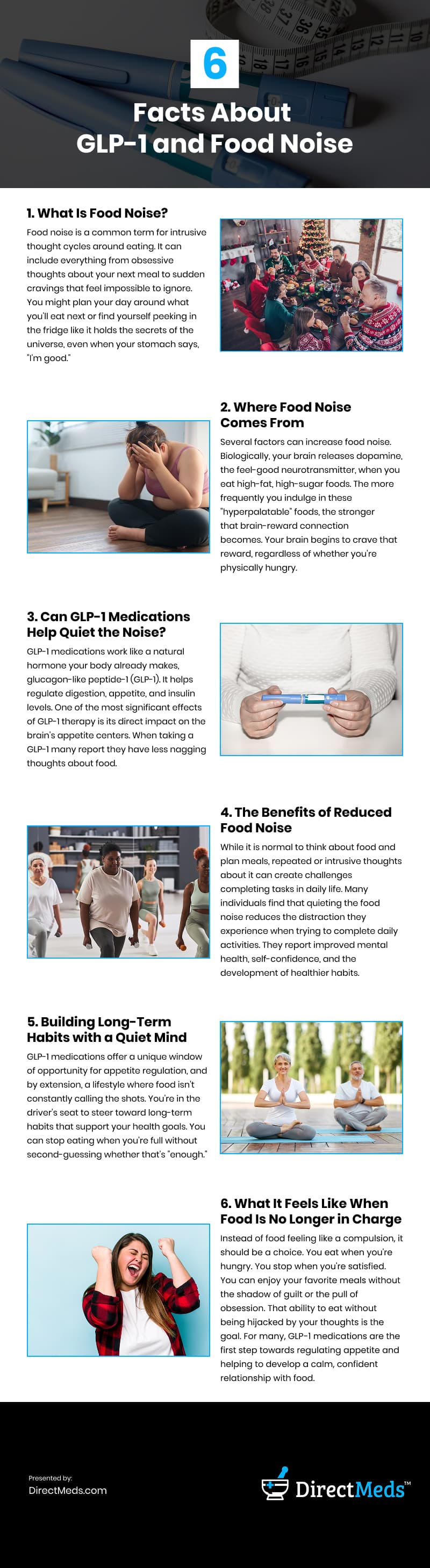
“Food noise” refers to a constant urge to eat, even without hunger, and describes persistent thoughts about food rather than a formal diagnosis. This infographic explains food noise and explores whether an online weight‑loss prescription may help regulate appetite and reduce intrusive thoughts.
1https://pmc.ncbi.nlm.nih.gov/articles/PMC6766432
2https://www.eurekalert.org/news-releases/1098257
Related Articles

April 7, 2026
9 Tips for Discussing Weight Loss Prescriptions with a Doctor
You’re sitting on the crinkly paper in an exam room, rehearsing what to say while the clock ticks louder than your thoughts. Talking to a doctor about ordering an online weight loss prescription can feel intimidating, especially if you are unsure how to start the conversation or worried about being judged. It’s easy to put […]
Read More

March 26, 2026
7 GLP-1 Weight Loss Mistakes to Dodge
You start a GLP-1 feeling hopeful and motivated. You’re even a little smug as your appetite finally quiets down and the scale budges. You think, I’ve cracked the code! But then progress stalls and old habits sneak back like they never left. What gives? GLP-1 medications such as semaglutide and tirzepatide are used in medical […]
Read More

March 17, 2026
What Your Body Goes Through When You Stop Semaglutide for Weight Loss
Semaglutide is a GLP-1 receptor agonist that is used in medical settings to support appetite regulation and blood sugar control in certain individuals, under healthcare provider supervision. As a GLP-1 receptor agonist, it may turn down the volume on hunger and help steady blood sugar. For many people, it feels like finally having a calm […]
Read More
Ready to Start?
Start your journey towards a healthier you!